Privacy Screen vs. Anti-Glare Screen Protector: What Is the Difference?
When choosing a screen accessory for a laptop or desktop monitor, buyers often compare privacy screens with anti-glare screen protectors. Although both products are placed over a display and may change how the screen looks, they serve different purposes.
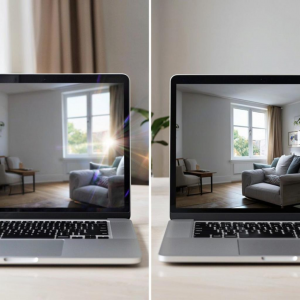
A privacy screen is designed to limit side-angle visibility and help protect on-screen information from nearby observers. An anti-glare screen protector is designed to reduce reflections from surrounding light sources, making the display more comfortable to view in bright environments.
In simple terms, a privacy screen focuses on visual privacy, while an anti-glare screen protector focuses on reducing glare. Understanding the difference helps consumers, IT departments, distributors, and procurement teams select the right product for their requirements.
1. What Is a Privacy Screen?
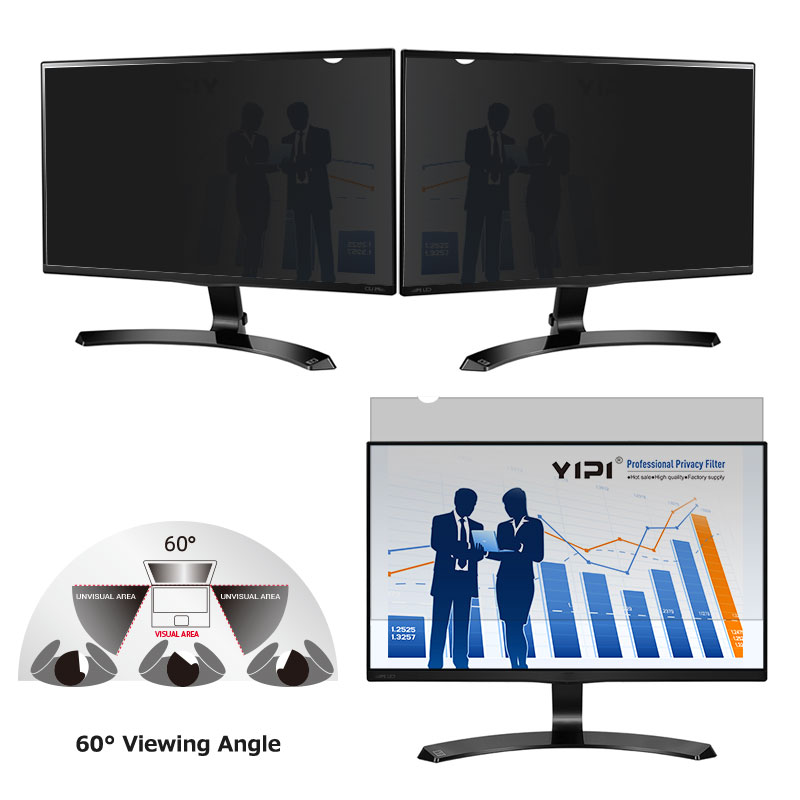
A privacy screen, also known as a privacy filter, is an optical accessory designed to restrict the viewing angles of a laptop or monitor display.
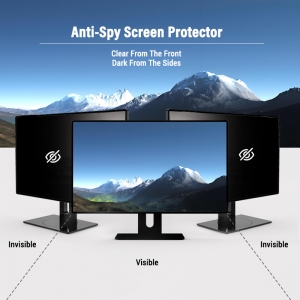
It allows the intended user to view the screen from the front while reducing visibility for people positioned to the left or right. This makes it useful in environments where confidential or sensitive information may be exposed to nearby observers.
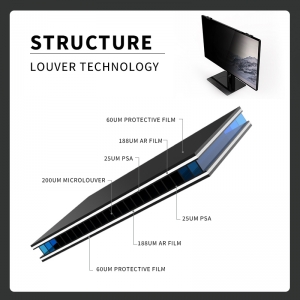
Many conventional privacy filters use micro-louver technology. This structure contains tiny light-blocking elements that control the direction of light passing through the filter.
The principle is straightforward:
-
From the front, light can pass through the filter so the intended user can view the screen.
-
From the sides, more light is blocked by the optical structure.
-
As a result, the screen appears darker and its content becomes harder to read from off-center positions.
Common applications of privacy screens
Privacy screens are commonly used in:
-
Corporate offices and open-plan workspaces
-
Airports, trains, and other public environments
-
Financial and administrative departments
-
Healthcare and professional service workplaces
-
Customer service counters and shared workstations
-
Business laptops used during travel
For organizations handling confidential information, a privacy filter can provide an additional layer of visual protection.
However, it does not replace access controls, device security, or appropriate information-handling procedures.
2. What Is an Anti-Glare Screen Protector?
An anti-glare screen protector is designed to reduce reflections caused by surrounding light sources.
Bright overhead lighting, windows, sunlight, and other reflective surfaces can make a screen difficult to view. Reflections may reduce perceived contrast and cause visual discomfort, especially when users work in brightly lit environments.
Many anti-glare screen protectors use a matte or surface-treated finish that diffuses reflected light rather than allowing it to form a sharp reflection.
How anti-glare technology works
Anti-glare products commonly use surface treatments or textured finishes to scatter reflected light across different directions.
Instead of reflecting light in a concentrated direction, the treated surface diffuses some of the incoming light. This can make reflections less noticeable and improve screen visibility in certain lighting conditions.
However, anti-glare treatments may also affect the appearance of the display. Depending on the material and surface finish, users may notice changes in sharpness, contrast, brightness, or fine-detail clarity.
Common applications of anti-glare screen protectors
Anti-glare products may be suitable for:
-
Offices with strong overhead lighting
-
Workstations near windows
-
Outdoor or semi-outdoor environments
-
Users who find reflections distracting
-
Devices with glossy displays
Their primary purpose is to improve viewing comfort by reducing distracting reflections, not to prevent nearby people from viewing screen content.
3. Privacy Screen vs. Anti-Glare Screen Protector: Key Differences
The two products may look similar, but their optical functions and intended applications are different.
| Comparison factor |
Privacy screen |
Anti-glare screen protector |
| Primary function |
Reduce side-angle visibility |
Reduce distracting reflections |
| Main technology |
Often uses micro-louver optical structures |
Often uses matte or light-diffusing surface treatments |
| Side viewing |
Designed to make screen content harder to see from the sides |
Generally does not restrict side viewing |
| Reflection control |
Depends on product design |
Main purpose |
| Front-view experience |
Designed to maintain a usable front viewing position |
Designed to reduce reflections, with possible changes in screen appearance |
| Typical application |
Protecting visual privacy |
Improving visibility in reflective environments |
| Main buyer concern |
Viewing-angle privacy and compatibility |
Glare reduction and display clarity |
The most important difference is that reducing glare does not automatically provide privacy, and restricting viewing angles does not automatically eliminate reflections.
Buyers should select products according to the problem they want to solve.
4. Can an Anti-Glare Screen Protector Protect Your Privacy?
No, not by itself.
An anti-glare screen protector is designed to manage reflected light. Its surface treatment does not necessarily restrict the direction in which display light travels.
As a result, someone sitting beside the user may still be able to read the screen, even when reflections have been reduced.
For example, an employee working on a laptop in a bright office may benefit from an anti-glare protector if overhead lights create distracting reflections. However, if the employee also handles confidential documents and wants to prevent colleagues from viewing the screen, an anti-glare protector alone may not meet that requirement.
A privacy filter is the more relevant product when side-view visibility is the main concern.
5. Can a Privacy Screen Also Reduce Glare?
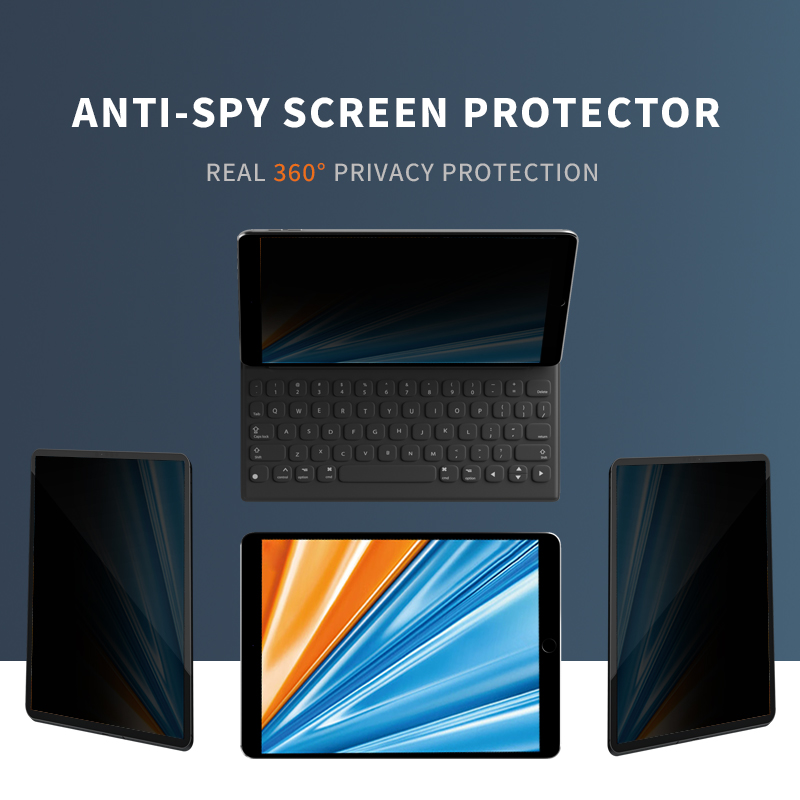
Some privacy filters may include additional surface treatments or optical features that help manage reflections. However, glare reduction should not be assumed to be a standard feature of every privacy screen.
The actual performance depends on the product's construction and specifications.
When comparing products, buyers should distinguish between:
-
Privacy performance: How effectively the filter reduces off-axis visibility.
-
Anti-glare performance: How effectively the surface reduces distracting reflections.
-
Optical clarity: How clearly the intended user can see the display.
-
Light transmission: How much display light passes through the filter.
If both privacy and glare reduction are important, ask the supplier whether a specific product supports both functions and request relevant product information or samples for evaluation.
6. Which Product Should You Choose?
The right choice depends on the user's main requirement.
Choose a privacy screen if:
-
You work with confidential business information.
-
You frequently use a laptop in public places.
-
People often sit or stand beside your workstation.
-
Your organization needs additional visual privacy for employees.
-
You supply laptop or monitor accessories to privacy-conscious customers.
Choose an anti-glare screen protector if:
-
Reflections make your display difficult to view.
-
Your workstation is near windows or strong lighting.
-
You mainly want to reduce distracting screen reflections.
-
Side-view privacy is not a major concern.
What if you need both privacy and glare reduction?
In this case, do not assume that one product automatically provides both functions. Compare the actual specifications and ask whether the manufacturer offers a privacy filter with additional anti-glare properties.
A sample test is the most practical way to evaluate the balance between privacy, reflections, brightness, and front-view clarity.
7. What Should B2B Buyers Consider When Sourcing These Products?
For importers, distributors, corporate procurement teams, and private-label brands, understanding the difference between these two categories is important when selecting products for a target market.
Identify the main customer requirement
Determine whether your customers are looking for visual privacy, glare reduction, or a combination of both. This helps avoid selecting a product that does not solve the intended problem.
Confirm the product's optical function
Ask suppliers to explain the technology used and provide clear specifications. A product described as anti-glare should not automatically be marketed as a privacy filter.
Check device compatibility
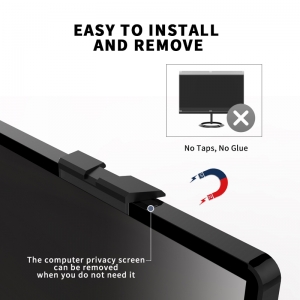
For laptop and monitor products, confirm the screen dimensions, aspect ratio, bezel design, and mounting requirements. Compatibility should be verified before bulk production.
Evaluate optical clarity
Test how the product affects brightness, readability, reflections, and viewing comfort. Different materials and optical structures may produce different results.
Request samples before bulk orders
Evaluate samples on the intended devices under realistic lighting conditions. This is particularly important when developing a new product line or private-label offering.
Discuss customization and supply requirements
If you are developing your own brand, confirm available product configurations, dimensions, branding, packaging, order quantities, and quality-control procedures with the manufacturer.
A clear product specification helps distributors and importers communicate the correct function to their customers and reduce avoidable purchasing errors.
FAQ
What is the main difference between a privacy screen and an anti-glare screen protector?
A privacy screen reduces visibility from unwanted viewing angles, while an anti-glare screen protector reduces reflections from surrounding light sources. They are designed to solve different display problems.
Does an anti-glare screen protector prevent people from seeing my screen?
Not necessarily. Most standard anti-glare protectors do not restrict viewing angles. People beside the user may still be able to read the screen.
Does a privacy screen reduce reflections?
It depends on the product. Some privacy filters may have additional reflection-control features, but anti-glare performance should be confirmed through the manufacturer's specifications.
Which is better for working in an office?
It depends on the office environment. A privacy screen is more suitable when nearby people may see confidential information. An anti-glare protector is more suitable when reflections from overhead lights or windows are the main problem.
Can I use a privacy filter and an anti-glare screen protector together?
Using two separate layers may affect display clarity, brightness, fit, and touch functionality. Compatibility should be checked before combining them. If both functions are required, ask the manufacturer whether a suitable combined product is available.
Are privacy screens and anti-glare protectors available for both laptops and monitors?
Both product categories are available for different types of displays, but supported sizes, materials, and installation methods vary. Buyers should confirm the exact device compatibility with the supplier.
Conclusion
Privacy screens and anti-glare screen protectors may look similar, but they serve different purposes.
A privacy screen controls viewing angles to reduce unwanted side viewing, while an anti-glare screen protector diffuses reflected light to improve viewing comfort in bright environments.
For businesses, the correct purchasing decision starts with identifying the actual customer requirement. If visual privacy is the priority, a privacy filter is the appropriate product category. If reflections are the main issue, an anti-glare protector is the more relevant choice.
YIPI (Shenzhen Xinpai Electronics Co., Ltd.) focuses on laptop and monitor privacy filter products for business applications. If you are a distributor, importer, corporate buyer, or private-label brand looking for privacy filter solutions, contact our team to discuss your product requirements.
Explore YIPI privacy filter products: https://www.privacyfilter.com/