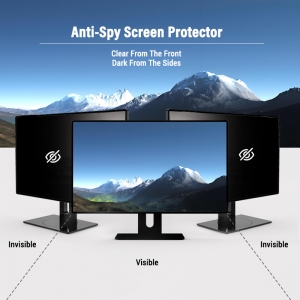
OEM and ODM Privacy Screen Filters: Customization Options for Brands and Distributors
For brands and distributors looking to sell privacy screen filters under their own labels, OEM and ODM manufacturing offer flexible ways to develop products for different markets and customer needs.
OEM (Original Equipment Manufacturing) generally means producing products according to a buyer's specifications, while ODM (Original Design Manufacturing) involves selecting or adapting an existing product design offered by a manufacturer.
For laptop and monitor privacy filters, customization may cover product dimensions, installation methods, packaging, branding, and other product requirements. The available options depend on the manufacturer's actual production capabilities and product range.
This guide explains the differences between OEM and ODM privacy screen filters, common customization options, and what brands and distributors should consider before choosing a manufacturing partner.
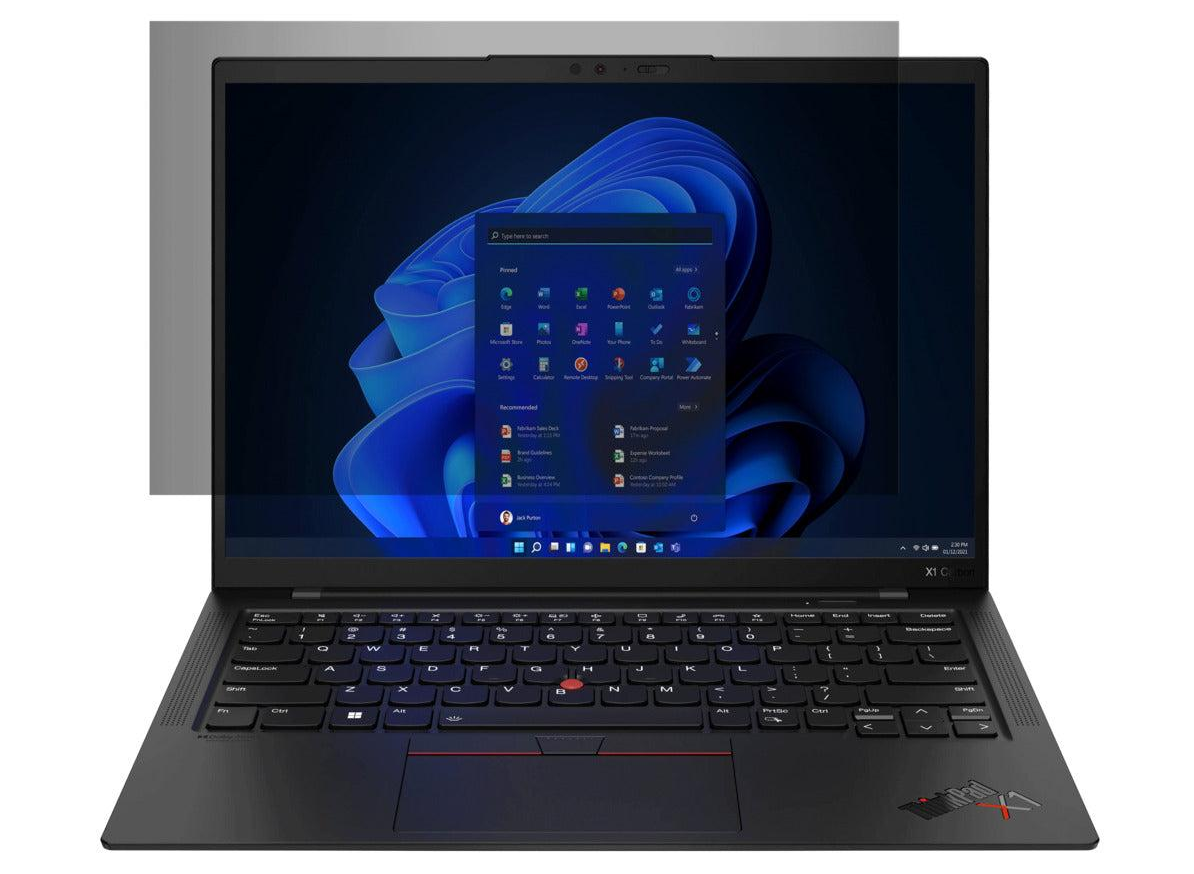
1. OEM vs. ODM Privacy Screen Filters: What Is the Difference?
OEM and ODM are two common manufacturing models for businesses developing or sourcing private-label privacy screen filters.
The main difference is how much of the product design comes from the buyer.
| Comparison |
OEM Privacy Screen Filters |
ODM Privacy Screen Filters |
| Product design |
Based on buyer specifications |
Based on the manufacturer's existing designs |
| Customization |
Buyer-defined requirements |
Selection or adaptation of available options |
| Development |
May require more technical coordination |
May reduce development work |
| Branding |
Can be customized according to agreement |
Can be customized according to agreement |
| Best suited for |
Brands with established product specifications |
Brands and distributors seeking a faster product development route |
OEM is generally suitable for buyers who already know what they need. ODM is often suitable for buyers who want to build a product offering around an existing manufacturer design.
The terms may be used differently by individual suppliers, so buyers should confirm exactly what each manufacturer includes in its OEM or ODM service.
2. What Can Be Customized in Privacy Screen Filters?
Customization requirements vary depending on the product type, target devices, and manufacturer's capabilities.
For laptop and monitor privacy filters, the following areas are commonly worth discussing.
2.1 Product Size and Device Compatibility
Product dimensions are among the most important considerations when sourcing privacy filters.
Laptop screens and desktop monitors come in different sizes, aspect ratios, and physical designs. A filter that does not match the display dimensions may leave part of the screen exposed or interfere with the device's edges.
Buyers should provide:
-
Target laptop or monitor models
-
Screen diagonal size
-
Active display area dimensions
-
Aspect ratio
-
Required filter dimensions
-
Any relevant bezel or edge design requirements
For brands serving multiple device categories, it may be useful to develop a product range covering different screen sizes and device types.
Before placing a bulk order, confirm the manufacturer's available size range and whether custom dimensions can be supported.
2.2 Installation and Mounting Options
Different customers prefer different installation methods.
Depending on the product range, privacy filters may use mounting approaches such as:
Each method has different considerations involving installation convenience, screen compatibility, removal, and product construction.
For example, a magnetic privacy filter may be suitable for devices designed to support magnetic attachment, while an adhesive filter may be considered when a more permanent installation is preferred.
Brands should confirm which mounting structures are available and whether custom mounting requirements can be accommodated.
2.3 Privacy Performance and Optical Requirements
Privacy performance is a key purchasing factor for laptop and monitor privacy filters.
Depending on the product specification, buyers may need to discuss:
-
Left and right viewing-angle limitations
-
Front-view clarity
-
Screen brightness and light transmission
-
Surface finish
-
Reflection and glare characteristics
-
Filter thickness
-
Compatibility with touchscreen displays, where applicable
These characteristics should be evaluated together rather than considered separately.
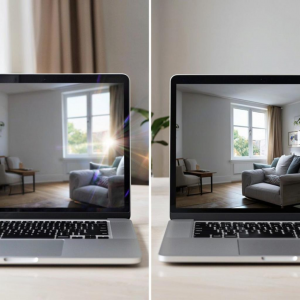
For example, a privacy filter designed for stronger side-view restriction may have different front-view characteristics from another product. Buyers should request samples and evaluate them under realistic working conditions.
Do not rely on a viewing-angle number alone. Confirm how the angle is defined, measured, and tested.
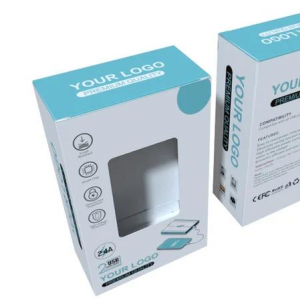
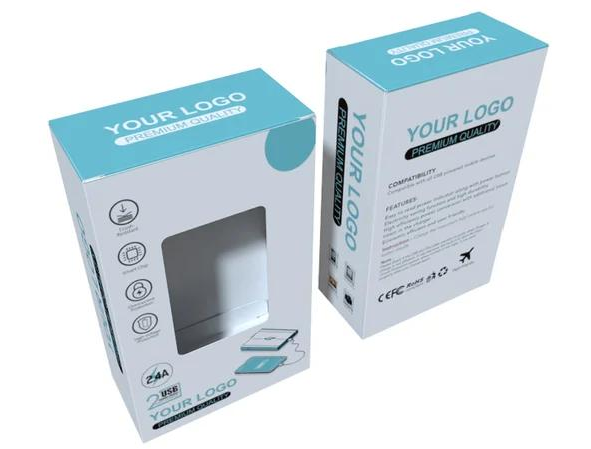
2.4 Branding and Private-Label Packaging
Private-label branding allows distributors and brands to sell privacy filters under their own business identity.
Depending on the supplier's capabilities and agreement, branding and packaging options may include:
Packaging should match the target sales channel.
For example, a retail brand may need consumer-friendly packaging with clear product compatibility information, while a B2B distributor may prefer compact packaging with product specifications and inventory labels.
Before production, approve the final artwork, product descriptions, model information, and packaging samples.
2.5 Product Accessories and Documentation
Accessories and documentation can also influence the overall customer experience.
Depending on the product design, buyers may discuss:
The included accessories should be confirmed in the quotation and approved sample to avoid differences between expectations and final delivery.
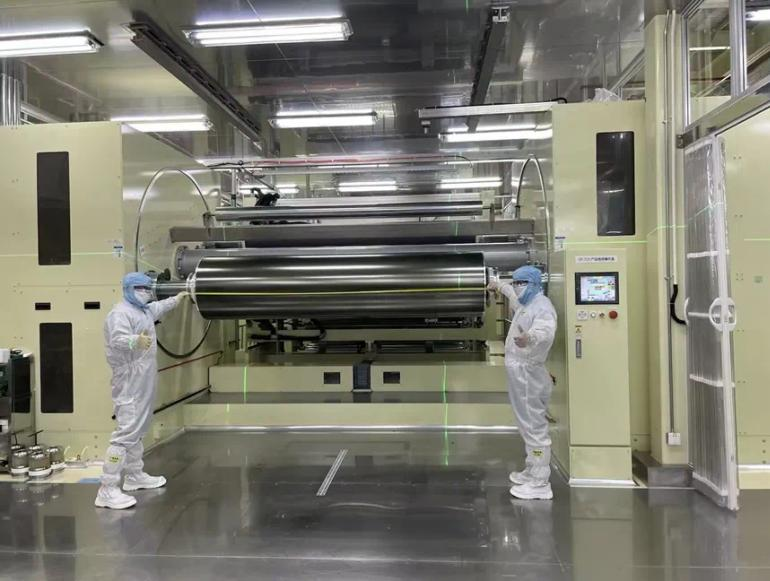
3. OEM and ODM Options for Different Buyers
Not every business needs the same level of customization.
The best approach depends on the buyer's sales channel, brand positioning, and product development resources.
| Buyer Type |
Common Requirements |
Suggested Approach |
| Private-label brands |
Brand identity, product specifications, packaging |
OEM or ODM |
| Importers |
Stable product range, pricing, bulk supply |
Existing products or OEM |
| Wholesalers |
Multiple sizes, practical packaging, product consistency |
Existing products or selected customization |
| Regional distributors |
Products suited to local device demand |
ODM or OEM |
| Corporate procurement suppliers |
Device compatibility, product specifications, samples |
Specification-based sourcing |
For businesses entering the privacy filter market, starting with existing product options may help reduce initial development work.
Businesses with established product requirements may prefer a more specification-driven OEM project.
4. OEM and ODM Privacy Filter Manufacturing Process
A clear development process helps both buyers and manufacturers reduce misunderstandings.
A typical cooperation process may include the following stages.
Step 1: Define the product requirements
The buyer provides target device models, screen dimensions, preferred installation method, required privacy performance, estimated order quantity, and branding requirements.
Step 2: Review available products and capabilities
The manufacturer evaluates the requirements and confirms which existing products, materials, sizes, and customization options can be supported.
Step 3: Confirm specifications and quotation
Both parties review the product specifications, customization details, packaging requirements, pricing, MOQ, and estimated production lead time.
Step 4: Sample evaluation
The buyer checks sample dimensions, device compatibility, installation experience, front-view clarity, privacy performance, and packaging.
Any necessary adjustments should be agreed upon before bulk production.
Step 5: Approve the final sample and artwork
The buyer confirms the product sample, logo, labels, packaging artwork, and other agreed specifications.
Step 6: Bulk production and quality inspection
The manufacturer produces the order according to the approved specifications and agreed quality requirements.
Step 7: Packaging and shipment
Finished products are packed according to the confirmed requirements and prepared for shipment.
The exact process, development time, and production arrangements vary by manufacturer and project complexity.
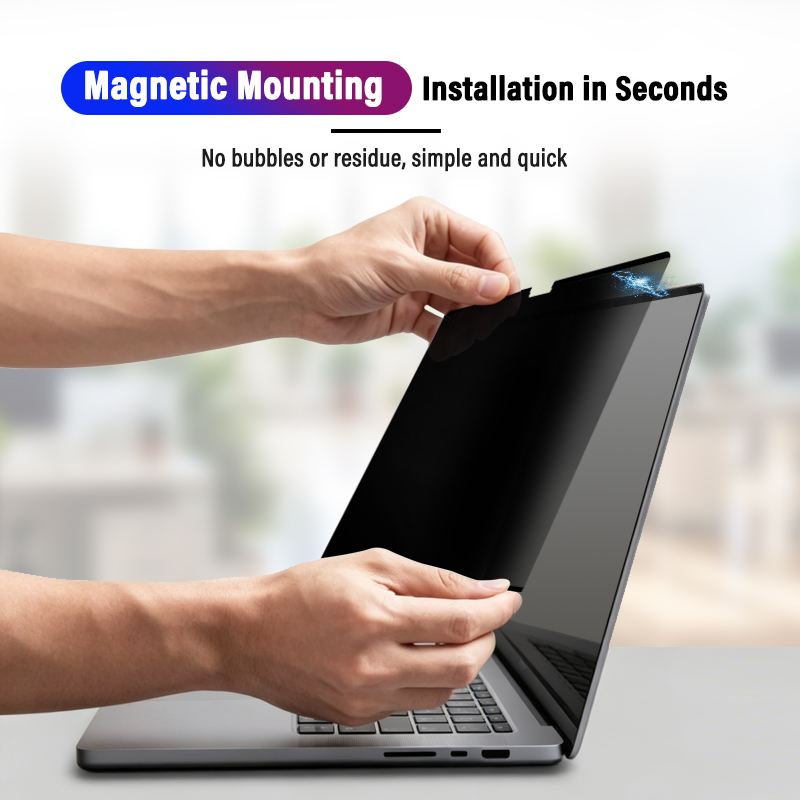
5. What Should You Confirm Before Choosing an OEM or ODM Manufacturer?
Choosing a manufacturing partner involves more than comparing unit prices.
Before starting a private-label privacy filter project, buyers should evaluate the following points.
Product Range and Technical Capabilities
Ask whether the manufacturer supplies laptop privacy filters, desktop monitor privacy filters, and the installation structures required for your target market.
Request product specifications and samples rather than relying only on catalogue descriptions.
Customization Scope
Confirm which items can actually be customized.
For example, a supplier may support custom packaging but may not be able to modify the optical structure or mounting design.
Ask for a written list of supported customization options.
Sample and Quality Evaluation
Samples help buyers check whether a product meets their requirements before committing to a larger order.
A practical evaluation should cover:
Agree on measurable acceptance criteria before bulk production.
MOQ, Pricing, and Lead Time
OEM and ODM projects may involve different costs and order requirements.
Ask the supplier to clarify:
-
Minimum order quantity (MOQ)
-
Sample charges
-
Custom tooling or development costs, if applicable
-
Packaging costs
-
Bulk pricing
-
Sample and production lead times
-
Shipping arrangements
Request a quotation based on the same specifications when comparing different suppliers.
Communication and Order Management
Clear communication is important when developing a private-label product.
A reliable supplier should be able to explain product limitations, confirm specifications, communicate changes, and provide clear production and shipment information.
Written confirmation helps reduce misunderstandings during the project.
6. Common Mistakes to Avoid in OEM and ODM Projects
Several issues can cause unnecessary delays or additional costs.
Choosing products based only on screen diagonal size
Two devices with the same advertised screen size may have different dimensions or aspect ratios. Always verify the actual display measurements and device compatibility.
Assuming every customization request is available
OEM and ODM do not automatically mean unlimited customization. Confirm the manufacturer's actual capabilities before finalizing the project.
Skipping sample testing
A product may look suitable in a catalogue but perform differently on the buyer's target devices. Test samples before approving bulk production.
Not defining privacy performance requirements
Terms such as “wide viewing angle” or “strong privacy” can be interpreted differently. Agree on specific test conditions and acceptance criteria.
Approving packaging without checking product information
Incorrect model numbers, compatibility details, or installation instructions can lead to customer complaints. Review all artwork and labels before production.
7. Frequently Asked Questions
What is the difference between OEM and ODM privacy screen filters?
OEM privacy filters are generally manufactured according to the buyer's product specifications. ODM privacy filters are usually based on existing manufacturer designs that can be selected or adapted for the buyer.
Can I sell privacy screen filters under my own brand?
Many manufacturers offer private-label options, which may include logo printing, product labels, and custom packaging. The exact options should be confirmed with the supplier.
Can I request custom sizes for laptop and monitor privacy filters?
Custom sizes may be available depending on the manufacturer's production capabilities, materials, and order requirements. Provide the exact screen dimensions and target device models for evaluation.
Can a manufacturer customize the viewing angle of a privacy filter?
Some manufacturers may offer different privacy performance specifications or product designs. However, not every viewing-angle requirement can be customized. Buyers should confirm available options and test samples before ordering.
Is OEM or ODM better for a new privacy filter brand?
ODM may be a practical starting point when existing products meet your market requirements. OEM may be more suitable when you already have detailed product specifications or need a product developed around specific requirements.
What information should I provide when requesting an OEM or ODM quotation?
Prepare your target product type, device models, screen dimensions, installation preference, required privacy performance, estimated quantity, branding requirements, and destination market.
The more specific your information is, the easier it is for the manufacturer to evaluate the project.
8. Work with YIPI on Privacy Screen Filter Sourcing
YIPI focuses on laptop and monitor privacy filters, serving businesses looking for privacy screen products for different device categories and market requirements.
For brands, importers, wholesalers, and distributors, the first step is to define the product requirements and identify which existing products or customization options are suitable.
When contacting YIPI, you can share:
-
Your target product category: laptop or monitor privacy filters
-
Device models and required screen sizes
-
Preferred installation method
-
Expected privacy performance
-
Private-label and packaging requirements
-
Estimated order quantity
-
Target market
This information helps us understand your sourcing needs and evaluate suitable product options.
Looking for an OEM or ODM privacy screen filter supplier? Contact YIPI to discuss your product requirements and explore potential cooperation opportunities.